
Meta’s AI Account Strikes: How to Run “Borderline” Ads Without Losing Your Ad Account
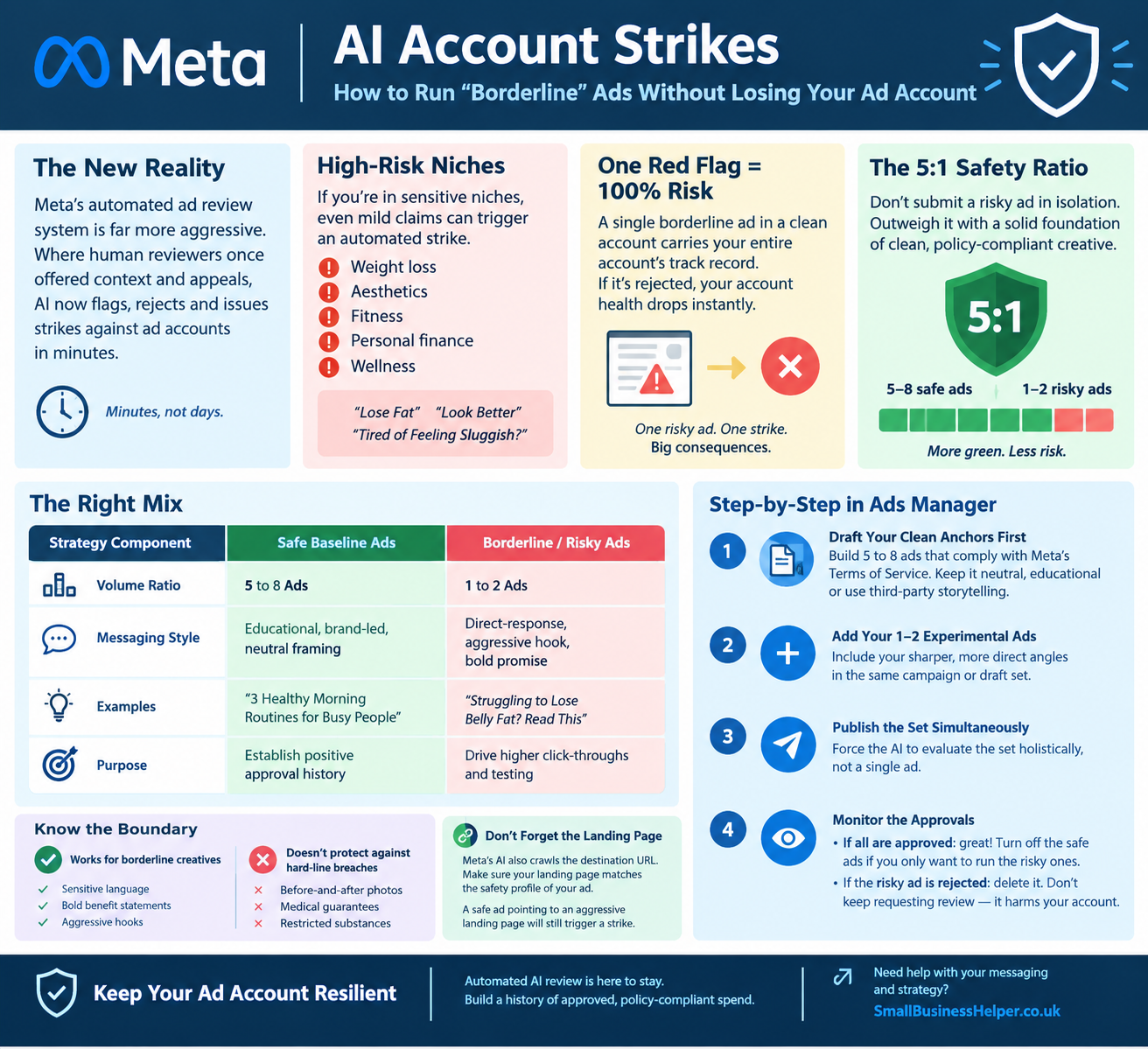
Meta’s automated ad review system has become substantially more aggressive. Where human reviewers once offered room for context and appeals, automated AI moderation now flags, rejects, and issues strikes against ad accounts in minutes.
Quick note: If you are a micro-business owner navigating this digital minefield, you already know how quickly a banned ad account can derail your lead flow. My entire focus at Small Business Helper is finding you better customers, without the headaches—and keeping your ad account alive is step one. Let’s dive into how to protect it.
For advertisers in sensitive niches—weight loss, aesthetics, fitness, personal finance, or wellness—phrases like “Lose Fat,” “Look Better,” or “Tired of Feeling Sluggish?” carry immediate risk. Under Meta’s Personal Attributes and Health policies, even mild claims can trigger an automated account strike if you aren’t careful.
If you produce a single, borderline ad inside a clean or quiet account, that single red flag carries 100% of your account’s immediate track record. If the AI rejects it, your entire account health drops instantly.
Here is the exact strategy seasoned media buyers use to protect their accounts when testing higher-risk angles.
The “Safety Ratio” Strategy (The 5:1 Buffer)
To run ads that push the envelope without tripping automated account bans, never submit a risky ad in isolation. Outweigh your borderline ads with a large foundation of 100% clean, policy-compliant creative.
| Strategy Component | Safe Baseline Ads | Borderline / Risky Ads |
| Volume Ratio | 5 to 8 Ads | 1 to 2 Ads |
| Messaging Style | Educational, brand-led, neutral framing | Direct-response, aggressive hook, bold promise |
| Examples | “3 Healthy Morning Routines for Busy People” | “Struggling to Lose Belly Fat? Read This” |
| Purpose | Establish positive approval history | Drive higher click-throughs and testing |
When Meta’s algorithm reviews a campaign batch containing seven clean ads and one borderline ad, the overall risk profile of the submission remains heavily in the green. You establish a pattern of compliant ad spend, making the account far less likely to face an automated penalty strike.
Struggling to come up with 5 to 8 safe ads that actually speak to your ideal buyer? This is exactly where most business owners get stuck. If you need help aligning your messaging to attract high-value prospects without risking policy breaches, check out the resources and consultancy options over at SmallBusinessHelper.co.uk.
Step-by-Step: How to Execute This in Ads Manager
- Draft Your Clean Anchors First: Build 5 to 8 ads that comply entirely with Meta’s Terms of Service. Use neutral language, third-party storytelling, or educational frameworks that avoid addressing personal attributes directly.
- Add Your 1–2 Experimental Ads: Insert your sharper, more direct angles into the same campaign or draft set.
- Publish the Set Simultaneously: Publish all ads together. This forces the automated review system to evaluate the set holistically rather than fixating on a lone, controversial ad.
- Monitor the Approvals:
- If all ads are approved: You now have the green light. If you only wanted to spend budget on the high-performing, edgy creative, simply toggle the safe “buffer” ads to Off once the campaign is running.
- If the risky ad is rejected: Delete the rejected ad immediately. Do not continually hammer the “Request Review” button on blatant policy flags, as repeated manual denials worsen your account health score. Your account remains intact because the vast majority of your batch was approved.
Borderline vs. Banned: Knowing the Boundary
This buffer strategy works for borderline creatives—ads that flirt with sensitive language, bold benefit statements, or aggressive hooks. It will not protect an account from hard-line policy breaches, including clear before-and-after photo comparisons, unsubstantiated medical guarantees, or ads promoting restricted substances.
Meta’s AI also crawls the destination URL. Ensure the landing page text aligns with the ad’s safety profile; a safe ad pointing to an aggressive landing page will still trigger an automated strike once the web crawler cycles through.
Automated AI review is here to stay, and its sensitivity will continue to increase. Keep your ad account resilient by establishing an active history of approved, policy-compliant spend.
If you’re tired of the constant marketing headaches and want to implement a streamlined system that filters out the tire-kickers and brings in premium clients effortlessly, let’s talk. Visit SmallBusinessHelper.co.uk to discover how tailored business consultancy can transform your bottom line.
How does this safety ratio strategy fit into the current ad campaigns you are planning to test?
